
How to Compare Translator Prices (and What First-Year Cost Means)
Use first-year required cost—not sticker price—to compare translation earbuds and handhelds for face-to-face use. How variants, Amazon snapshots, and blank year-one totals work.
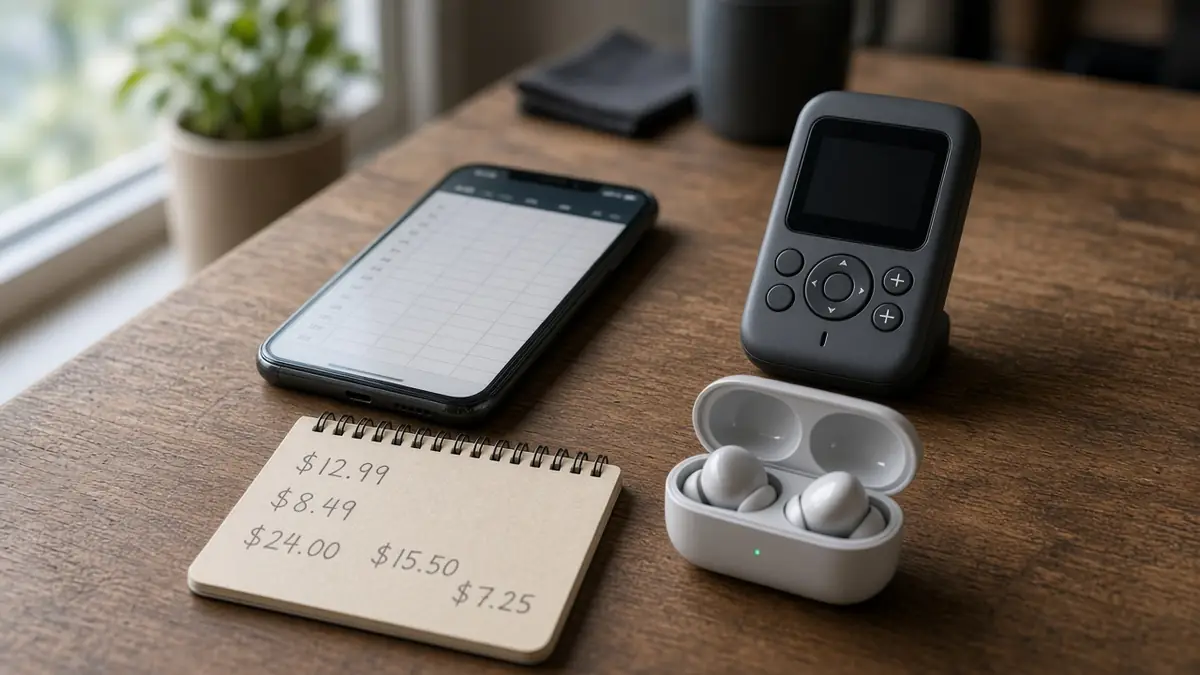
Compare dedicated translators by first-year required cost for the same face-to-face use—not by sticker price alone.
Key takeaways
- First-year required cost = official hardware price + fees you must pay in year one for two people talking face to face (online OK, within included free minutes).
- Optional call/media plans, separate offline add-ons, tax, and shipping stay out.
- If a required fee is unknown, the year-one total stays blank—and never sorts as $0.
- Amazon’s price does not replace the official hardware price or the year-one total.
- Split buy options (offline package, data years, one-time vs subscription) before you compare.
Who this is for
- You want a fair way to compare translator hardware before buying.
- Sticker price, subscriptions, or bundled data years are muddling the choice.
- Less useful when you only want lab accuracy scores or a single “best device” pick.
Sticker price alone is the wrong sort key. For translation earbuds, handhelds, and meeting hubs, compare first-year required cost for the same face-to-face use, keep purchase options separate, and treat Amazon prices as a second number—not a replacement for the brand’s hardware price.
Dollar amounts here are as of November 12, 2026 from the price table, not live checkout.
What every year-one number assumes
Every first-year figure uses the same picture so comparisons stay fair:
- Two people talking face to face
- An online connection is available (phone data, Wi‑Fi, hotspot, or built-in data)
- Usage stays within the included free online allowance
- You do not need call, video, or other media translation
- You do not need a separate offline pack beyond what that buy option already includes
- You do not add extended warranty
- Tax and shipping are excluded
First-year required cost means the official current hardware price plus any fees that must be paid in the first twelve months for that picture. Optional subscriptions can still appear on product pages, but they stay out of the year-one total unless they are required for face-to-face talk.
If a required fee is unknown, the year-one cell shows — . That blank is not a $0 bargain.
Why sticker price alone misleads
The number on a product card is rarely the full story.
A handheld might bundle two or five years of cellular data; another might need your phone’s hotspot every time. An earbud listing might be a one-time purchase or a subscription path with different upfront prices. A “with offline package” option can cost more upfront while saving a later download fee.
Sorting only by hardware price pushes expensive data bundles down even when that is the option you meant to buy, and pushes cheap online-only earbuds up even when you needed offline pairs in the box.
Hardware price still shows for transparency. Default sorting uses first-year required cost, with blank year-one totals at the bottom instead of pretending to be free.
What first-year cost includes and excludes
Included, when the figure is complete:
- Official hardware price for that exact buy option (not a nearby color or bundle)
- Required first-year fees for face-to-face talk—for example bundled eSIM years, or use inside a documented free monthly minute pool
Excluded:
- Optional call and media plans (for example Timekettle’s optional $14.99/month upgrade on some subscription listings)
- Offline packs you must buy separately if your option is online-only
- Extended warranties
- Sales tax and shipping
- Renewal after bundled data expires (noted when official renewal pricing exists; foreign-currency renewals are not converted unless already shown that way)
Optional does not mean useless. It means you can hold a face-to-face conversation without paying that fee under the picture above.
Official price and Amazon price stay separate
Official store price and Amazon.com snapshot price are two different numbers. Amazon can differ with promotions or Prime offers. Amazon’s displayed price does not replace official hardware price or first-year required cost.
Decide which channel you will actually buy from, then read both. The snapshot date only tells you when that Amazon figure was checked.
Keep buy options separate
Most confusion is really mixed buy options. Keep these on separate lines:
- With offline package versus online only
- Two-year data versus five-year data (common on Pocketalk S2 family listings)
- One-time purchase versus subscription hardware (for example Timekettle W4 Plus)
- Two-packs and bundles versus single units
- Different official storefronts when pricing or bundled years differ
Do not compare a subscription earbud’s year-one total to a handheld’s without reading the option name. Do not hang a five-year Amazon listing on a two-year data line.
How to use the price table
Open the price table and:
- Set filters for brand, form factor, phone need, and offline support before you trust a sort order.
- Sort by first-year required cost when the value is known. Blank totals sink to the bottom.
- A blank year-one total means a required price or fee is missing—not that the device is free.
- Tax and shipping stay out so lines stay comparable.
- Phone required, Data, and Offline describe connectivity for face-to-face use, not lab scores.
Open a product page for source links and notes when official pages disagree.
Why there is no “$/offline language” rank
Dividing price by “number of offline languages” looks neat and fails in practice:
- Online language counts, accent counts, offline language counts, and offline language pairs are different units. Adding them is meaningless.
- A count without an official list does not prove your languages are covered.
- Direction matters (English→Spanish is not always the same as Spanish→English).
- Some offline modes need a paid download or a phone to fetch packs first.
Published vendor numbers stay linked and dated. When only a count appears—with no official pair list—that limit is called out in plain language. More detail: Offline languages vs the number on the box.
A worked example
Suppose you want earbuds for tourist conversations with Wi‑Fi or phone data available. A low hardware price might still mean a mandatory phone app, no bundled offline pairs, or a subscription upsell for modes you do not need. A higher first-year number on a handheld might already include multi-year eSIM.
Use first-year required cost to compare like options, then check whether your languages are listed or only counted. Accuracy in noisy rooms is outside this comparison—use independent reviews for that.
If a guide and the live price table disagree, trust the dated table figures.
Bottom line
Sort and compare by first-year required cost on matching buy options. Keep Amazon prices separate. Treat blank year-one cells as missing data—not free. Then open the price table.
FAQ
What is first-year required cost?
Official hardware price plus fees you must pay in the first 12 months for two-person face-to-face use (online OK, within included free minutes). Optional call or media packs, separate offline add-ons, tax, and shipping stay out.
Why do some lines show — instead of a price?
A required fee or official price is missing. Those year-one totals stay blank and never sort as $0 bargains.
Does the Amazon price replace the official price?
No. Amazon snapshots stay in their own column. Official hardware price and first-year required cost are not overwritten by Amazon checkout numbers.
Should I rank by price per offline language?
No. Online languages, accents, offline counts, and pairs are different units. There is no $/offline-language ranking here.